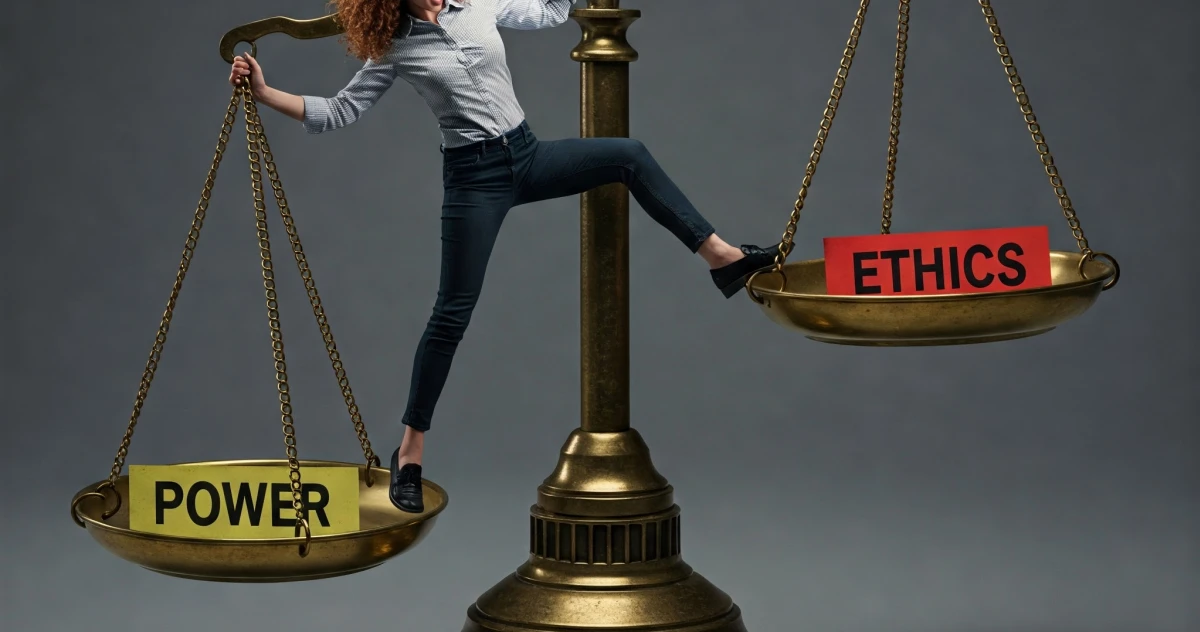
Power is the ability to affect outcomes beyond oneself. Technology increases that ability. Intelligence magnifies it further. Scale then extends it across institutions, systems, and entire populations. This is why the ethical question becomes unavoidable whenever power grows.
Power is not automatically good or bad. It is directional. It takes its moral meaning from the principles that govern it. In the absence of ethics, power drifts toward convenience, self-interest, control, and abstraction. It begins to serve what is efficient rather than what is right.
The danger becomes sharper in the age of intelligent systems. A tool that can influence hiring, lending, policing, healthcare, education, or information flow is not merely technical. It is moral in consequence. Even if its designers describe it as neutral, its effects will still shape real lives.
Ethics matters because it asks questions that raw power does not ask on its own. Who benefits? Who is harmed? Who is accountable? What happens when the system is wrong? Can its decisions be questioned? Can those affected understand what happened to them?
Without ethical constraints, power often becomes opaque. It presents itself as progress while quietly concentrating control. It becomes harder to challenge because it is wrapped in language of innovation, automation, and optimisation. But moral legitimacy cannot be assumed simply because a system is advanced.
Ethical power is different. It accepts responsibility. It remains answerable. It is willing to be examined, limited, and corrected. It understands that the greater the capability, the greater the obligation to act justly.
This is why power needs ethics. Not as decoration, and not as public relations, but as governance. The future will depend not only on how much power we build, but on whether we have the moral seriousness to govern it well.