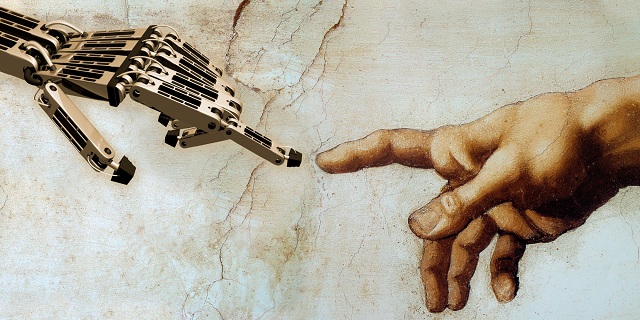
Technology changes what human beings can do. Faith addresses what human beings ought to do. The two should never be confused, but neither should they be isolated from each other. One concerns capability. The other concerns meaning, truth, and moral direction.
We are living in an age where powerful systems can generate language, influence decisions, shape attention, and scale across societies with extraordinary speed. Yet the existence of power does not answer the question of purpose. Just because something can be built does not mean it should be built without restraint, wisdom, and moral clarity.
Faith matters here because it reminds us that human life is not reducible to efficiency, prediction, or optimisation. A person is not simply a data point. Human beings carry dignity that cannot be measured fully by systems, scores, or output. When technology forgets this, it begins to drift away from service and toward domination.
Faith also reminds us that truth is not negotiable. In an age of generated media, algorithmic persuasion, and synthetic fluency, the discipline of truth becomes even more important. Technology can amplify both wisdom and deception. It can assist discernment, or it can dull it. The deciding factor is not the tool alone, but the moral framework of the people using it.
There is also a question of power. Technology extends human reach, but faith asks whether that reach remains accountable. It asks whether we are becoming more truthful, more humble, more just, and more responsible. Without that moral interrogation, technological progress can become spiritually empty even when it appears materially impressive.
Good technology should serve life, not replace its meaning. It should support human flourishing without pretending to define the whole of what it means to be human. Faith protects that boundary. It insists that there are dimensions of reality, conscience, love, sacrifice, truth, and worship that no machine can exhaust.
The future will not be shaped by technology alone. It will also be shaped by the convictions that govern its use. That is why faith still matters in the technological age. It gives moral direction to power.